Fiji Bull Shark Diving: What Beqa Lagoon Is Really Like
When my wife and I planned our 33 day honeymoon through Hong Kong, Fiji, and New Zealand, we debated whether or not to include a shark dive in our itinerary. Few experiences sound crazier on paper than dropping into open water with bull sharks and no cage. Then you get to Fiji, learn about the safety protocols in Beqa Lagoon, and the whole thing shifts from absolutely not to okay, maybe.
That is why Fiji bull shark diving pulls in so many certified divers. It is intense, yes. It is also one of the rare shark dives where geography, visibility, operator experience, and predictable shark behavior all line up in your favor.
If you are curious, nervous, or both, here is what this dive is really like, who should book it, and where you should be a little pickier than the average traveler.
Key Takeaways
- World-Class Conditions: Beqa Lagoon is globally renowned for bull shark diving due to its warm, clear water and the presence of healthy, predictable shark populations supported by the Shark Reef Marine Reserve.
- Safety-First Protocols: Reputable operators utilize structured viewing zones, such as underwater corridors, and employ experienced guides to maintain a controlled, professional environment rather than a reckless stunt.
- Experience Requirements: While not technically difficult, this dive requires mental composure; it is highly recommended to log a few standard dives before attempting an encounter with apex predators.
- Quality Over Price: When selecting an operator, prioritize safety records, group size, and professional credentials over the lowest cost, as you are paying for expertise, specialized briefings, and rigorous risk management.
Table of contents
What makes Beqa Lagoon in Fiji the best place for bull shark diving?
Fiji has shark encounters in more than one region, but Beqa Lagoon is the name that keeps coming up for bull sharks.
The tropical waters are warm year-round. Visibility is often far better than what people expect around bull sharks. The sites are well known, and the Shark Reef Marine Reserve has helped support a healthy shark population in the area. These vibrant coral reefs sustain the entire ecosystem, providing the food source necessary for bull sharks to thrive.
Bull shark diving in Fiji is a year-round activity, as the water temperature in Beqa Lagoon remains warm throughout the seasons. While sharks are present every month, many operators note that conditions can vary, so it is worth checking with your chosen dive shop for their current insights on the best visibility and shark activity for your specific travel dates. Also shark activity, and shark sizes, depend on what period they are in, such as whether it is mating season or not.
Why Beqa Lagoon draws so many sharks
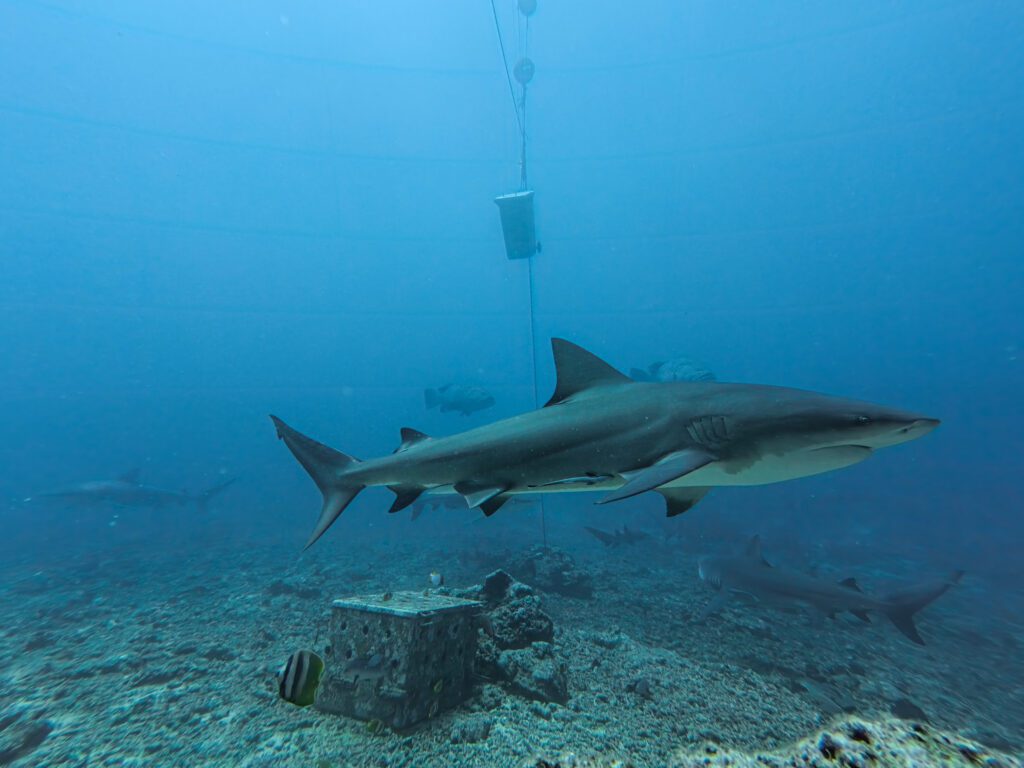
Beqa Lagoon sits in a sweet spot. Deep ocean currents push nutrients into the area, which brings in baitfish and other marine life. Healthy reef systems hold that life in place, and the big predators follow the food.
Most divers depart from the town of Pacific Harbour to access these dive sites. While some visitors arrive via day cruises from Nadi or Denarau, the specialized shark diving Fiji experience in Beqa is unique for its depth and the sheer variety of shark encounters available. We stayed at Nanuku Resort, which was located just 5 minutes from our dive operator, Coral Coast Divers.
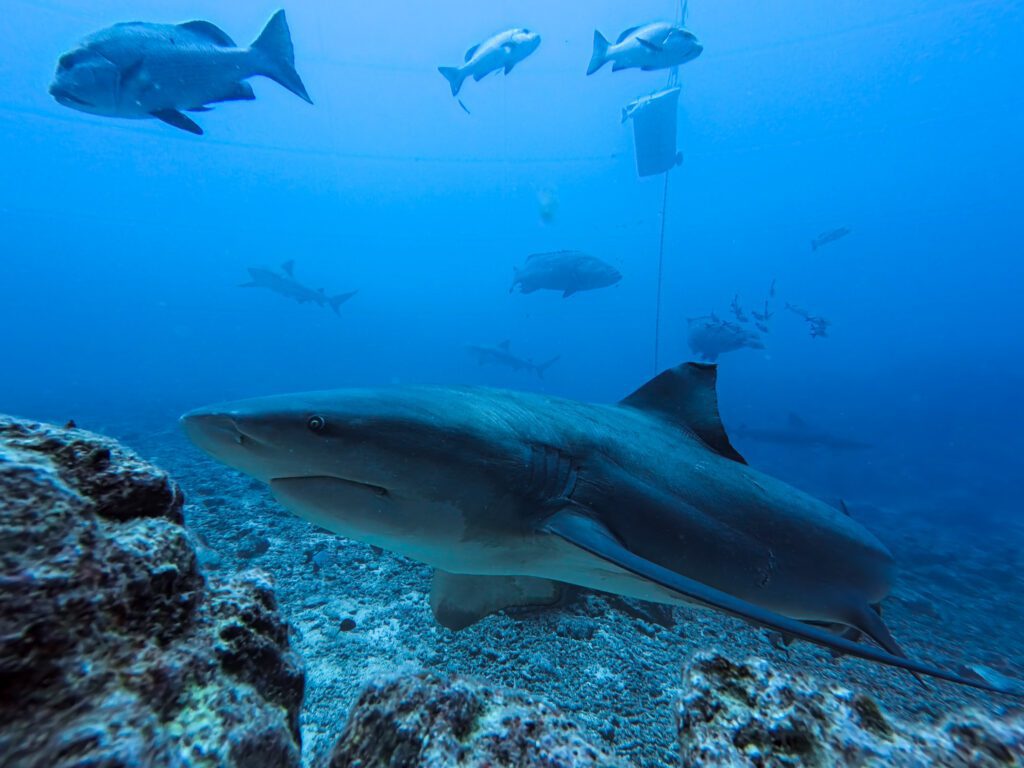
Instead of dark, silty water where you know sharks are there but cannot see much, Beqa often gives divers clear views. It also is not only bull sharks. Depending on the site and current conditions, divers may see Tiger sharks, Blacktip reef sharks, Whitetip reef sharks, Tawny nurse sharks, Silvertip sharks, and Lemon sharks. On our dive we also saw two HUGE goliath groupers just hanging around.
Why the same sharks keep coming back to Beqa Lagoon
The dives are consistent because the sharks are consistent. The dive masters have watched many of the same animals return to the same area over long stretches of time. They learn patterns, size, temperament, and how certain sharks move around the site.
That does not mean anyone is in control of a wild animal. Let us not pretend that. These are still bull sharks. But repeat behavior gives dive teams a better read on what they are seeing, and that helps with both safety and predictability.
Fiji has other shark experiences too, including the Yasawa Islands, where snorkelling with sharks is a popular alternative for those not looking to scuba dive. Still, Beqa is the spot most divers mean when they talk about the big bull shark dive in Fiji.
What the dive is actually like from start to finish
The day starts long before anyone enters the water. Even before boarding the boat, the nerves begin to creep in. There is something surreal about hearing the words “bull shark dive” repeated over and over while gearing up for the experience yourself. That’s why it’s also important who you book with, because as any diver knows, not every dive shop is the same. We were told that we would have 2 dives, each with a maximum bottom time of 30 minutes, and a one hour surface interval in between.
Why we chose Coral Coast Divers for our bull shark dive
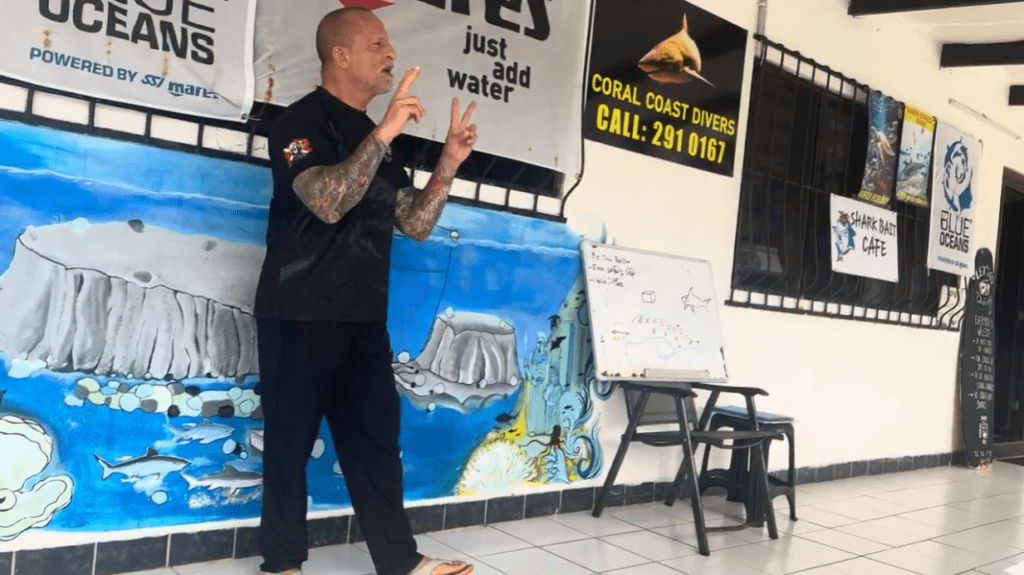
We chose Coral Coast Divers for our dive largely because of their outstanding reviews and reputation for safety.
Before we ever stepped onto the boat, the owner personally led an in-depth safety briefing on land that lasted nearly an hour. Instead of feeling like a tourist attraction built around adrenaline and an easy cash grab, it felt like a highly structured wildlife encounter run by people who had spent years understanding these animals.
The briefing covered shark behavior, body language, descent procedures, hand signals, positioning, and exactly what to do if a shark came too close. One phrase stuck with me the entire dive: stay low, stay calm, and do not act like prey.
If a shark approaches, your instinct might be to back away quickly, but the guides explained that sudden movement is exactly what you want to avoid. Instead, you stay still, lower your profile, and let the dive masters manage the interaction.
By the time we finally boarded the boat, the fear had shifted into something else entirely. Not comfort exactly, but confidence that the dive was being run by experienced professionals who took safety incredibly seriously.
How the setup & Coliseum dive site helps keep divers safe
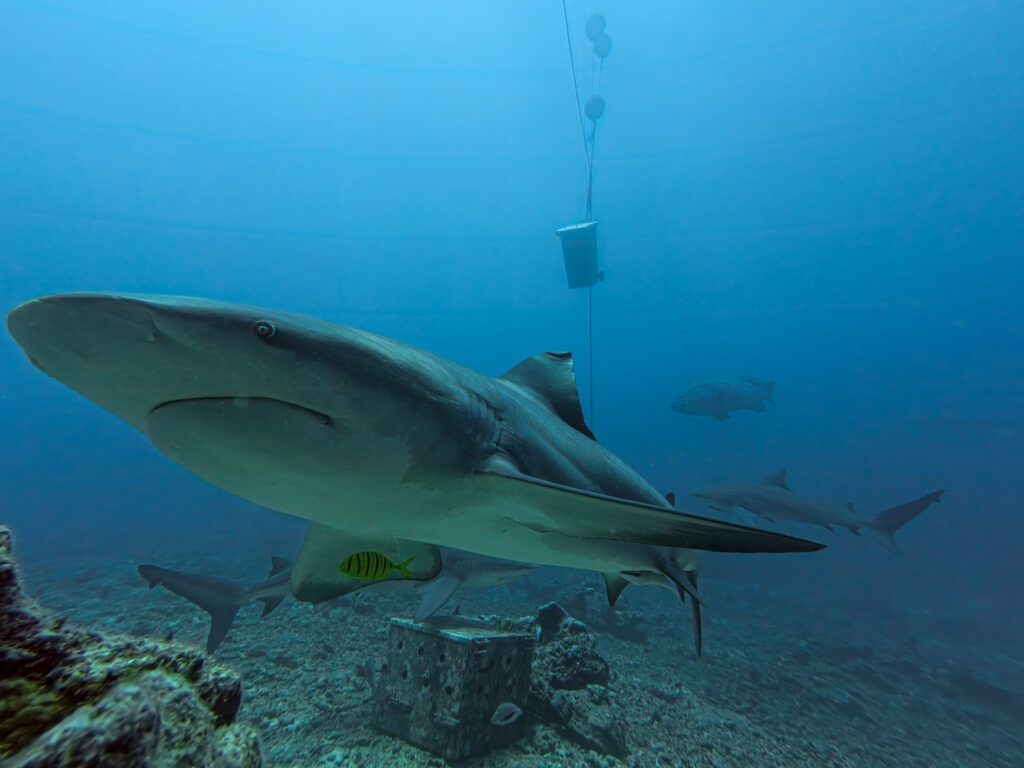
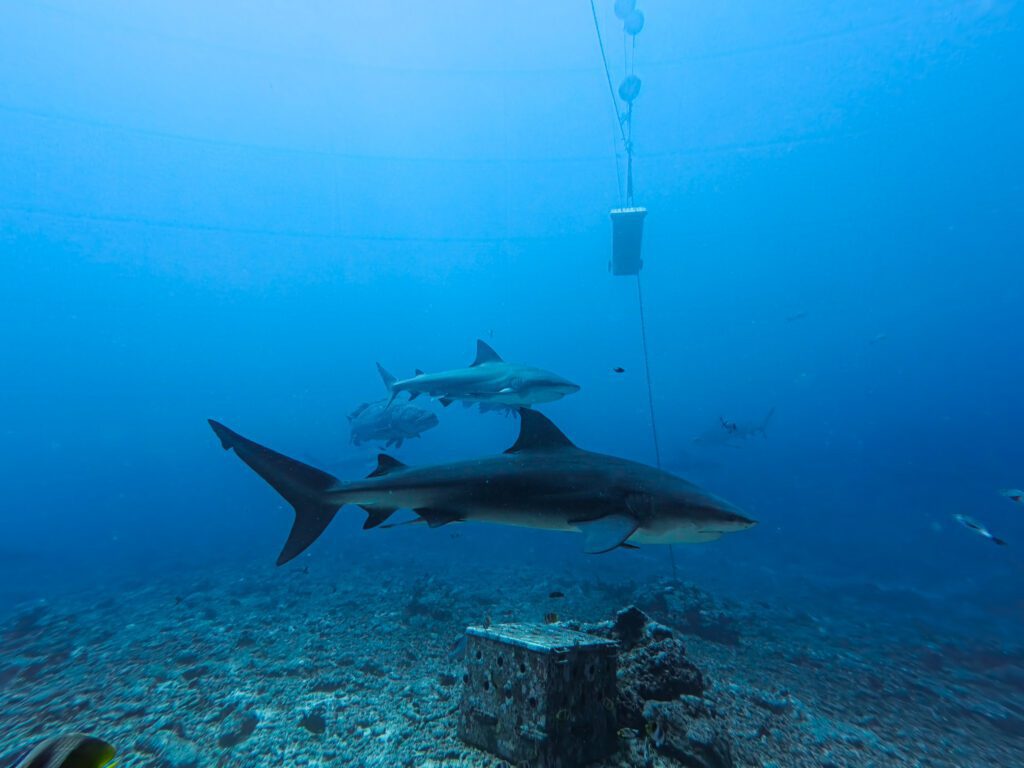
Not every operator in Beqa Lagoon uses the same setup. Coral Coast’s site, called the Coliseum utilizes an underwater corridor essentially. You have a reef wall at your back and a lower rock wall in front. Divers kneel in the gap, facing open water. That means fewer blind spots and far less chance of an animal approaching from behind or above without warning.
Groups stay small, around 10 or 11 divers, with several guides in the water at once. The dive master often positions themselves slightly above and behind the diver line. Some wear chain mail over their wetsuits, which looks like underwater armor. They carry poles for redirection, not for striking sharks.
We liked this setup much more than others we’ve seen where you’re all laying on your bellies on the ocean floor and the sharks are kind of all over you at once. You can’t raise your head up too much to see, and you have nothing protecting you from behind/above.
Then the bull sharks arrive. Sometimes dozens of them appear, joined by big groupers, snapper, and other predators. Axel, the owner, would actually hand feed some of the sharks that he would recognize, which is a wild site to see. These predators do not look frantic underwater. They look efficient, smooth, and unhurried, which somehow feels more intense.
The entry & exit can feel more intense than the dive itself
The moments just before you go down and just before you come back up can feel more intense than the dive itself.
The bottom portion of the dive may feel organized and surprisingly calm, but the entry can bring a real rush as you descend quickly and settle into position. Instead of waiting on the surface for your group to enter the water, as soon as you hit the water you are supposed to descend to the 15ft safety line underneath the boat. This is to avoid looking like prey to the sharks below. Then, on the way out, things can feel even more urgent. Once it’s time to go, you all move at once to exit the dive site and ascend the mooring line. Divers move up together, guides keep a close watch, and sharks may still be visible below during the safety stop.
It is still a controlled procedure, but it does not have the relaxed feel of a standard reef dive. If you do not like feeling rushed underwater, the entry and exit may get your pulse racing more than the shark viewing itself.
Who should try Fiji bull shark diving, and who should wait
Could a basic open water certification be enough? Yes. Should every newly certified diver jump straight into this? I would not.
This dive is best for people who are already comfortable underwater. You do not need 500 logged dives, but you do need solid buoyancy, calm breathing, and enough confidence that your brain does not lock up when the adrenaline hits. While my wife and I have close to 200 total dives between us, we were the most experienced divers in the group, outside of one person who had slightly more dives than me.
But there was also someone who chose to do this as his first ever dive as an open water certified diver. It’s no surprise he came back on the boat with a dangerously low amount of air. Please don’t be that guy.
Why a little dive experience helps
Bull shark diving in Fiji is not technically complicated in the way a cave or wreck dive is, but it is mentally stimulating.
You are descending fast, following precise instructions, staying in position, and watching large predators pass close in front of you. If your buoyancy is erratic or you burn through air when stressed, the whole experience becomes difficult.
That is why I tell most divers to get at least 10 to 15 easier dives under their belt first. Try some shore dives, reef dives, or a couple of drift dives. Learn how you breathe when you are excited, and learn how you move when your attention gets pulled away. The better your baseline skills are, the more you will enjoy what you are there to see.
Costs, operators, and what to look for before you book
This is one of those activities where the cheapest option should not be your deciding factor.
For Coral Coast Divers, we paid around $325 per person for everything: tips, transportation, two tank dives, etc. While certainly not cheap, it didn’t feel outrageous. Most of these dive shops are based out of Pacific Harbour, which serves as the primary gateway for those heading out to Beqa Lagoon.
How to choose a dive operator you can trust
Look for small groups, strong reviews, experienced shark guides, and a setup that feels intentional. If an operator communicates clearly about safety positioning, shark behavior, and marine conservation, that is a positive sign. You also want a crew that deeply respects the animals. It’s hard to know all of these things until you’ve already committed and you’re on the boat, but try to do your research as best as possible first.
Frequently Asked Questions
Is it safe to dive with bull sharks in Fiji without a cage?
Yes, when booked through reputable operators in Beqa Lagoon, the experience is highly controlled and professional. Guides use specific positioning, hand signals, and years of experience with local shark behavior to manage the environment and ensure diver safety.
Do I need advanced certification for the bull shark dive?
No, most will accept basic Open Water divers, although it is strongly recommended that you have solid buoyancy control and confidence in the water. A minimum of 10 to 15 logged dives is suggested to ensure you can stay calm and focused during the encounter.
What sharks will I see besides bull sharks?
Beyond the bull sharks, Beqa Lagoon is home to a diverse array of marine life including Tiger sharks, Blacktip reef sharks, Whitetip reef sharks, Tawny nurse sharks, Silvertip sharks, and Lemon sharks. The exact species encountered can vary depending on the specific site and ocean conditions on the day of your dive.
When is the best time of year to go shark diving in Fiji?
Bull shark diving in Beqa Lagoon is a year-round activity because the tropical water temperatures remain warm throughout the seasons. While sharks are present every month, conditions like visibility can vary, so it is best to check with your chosen dive shop for current insights prior to booking.
Conclusion
Bull shark diving in Fiji is one of those experiences that sounds insane until you understand why Beqa Lagoon works so well. Warm water, clear visibility, predictable shark behavior, and carefully run operations create a wildlife encounter that feels intense without feeling reckless.
For the right diver, it is an unforgettable adventure. For us, it was a significant bucket list item that is well worth checking at the highest level. If you are looking for an expertly managed, high-adrenaline underwater encounter, Fiji bull shark diving is difficult to beat. It remains the gold standard for anyone who wants to experience these beautiful apex predators up close in a place built specifically for that experience.