

Fiji Airways A330 Business Class Review: Hong Kong (HKG) to Nadi (NAN)
Key Takeaways
- The Fiji Airways A330 business class features older angled-flat seats that don’t provide true lie-flat comfort, perfect for long flights.
- Despite the dated hard product, the warm Fijian hospitality and strong in-flight service enhance the overall experience.
- Meal service impressed with full multi-course offerings, showcasing thoughtful catering and good pacing throughout the flight.
- The cabin layout (2-2-2) lacks direct aisle access for window seats, which may inconvenience solo travelers.
- Overall, this Fiji Airways A330 Business Class Review highlights the importance of prioritizing service and food over seat comfort.
If you’ve ever booked a “business class” seat with points and miles and assumed it automatically means a private suite and a perfectly flat bed, we’ve got a real-world reminder for you. Our Fiji Airways business class flight from Hong Kong to Nadi in the business class cabin was a mix of two things that don’t usually share the same sentence: an older, dated seat, and some of the warmest in-flight hospitality we’ve had in a long time.
This Fiji Airways A330 business class review covers the Hong Kong (HKG) to Nadi (NAN) route in detail, which runs around 10 hours from Hong Kong to Fiji. We’ll cover what to check before booking, where we’d sit next time, what the seat is actually like (spoiler: angled-flat, not truly lie-flat), and why the crew and food carried the whole experience.
If you’re considering paying cash, using miles, or gambling on an upgrade offer, this is the honest “set your expectations” guide we wish we had in our pocket.
This flight was taken as part of our 33-Day honeymoon through Hong Kong, Fiji, and New Zealand. For a full part one recap of our time in Hong Kong, check out our podcast episode #113
Table of contents
- Booking and airport basics, what we paid, where to sit, and what to expect at HKG
- Inside the Fiji Airways A330 Business Class seat, comfy but not the lie-flat bed we expected
- Food and service, where Fiji Airways really shines
- Our final verdict, who should book this business class, and smart alternatives
- Fiji Airways A330 Business Class Review: Final Thoughts
Booking and airport basics, what we paid, where to sit, and what to expect at HKG

We booked this flight because it was a rare reward seat in award travel: a nonstop that lined up with our broader itinerary. We also liked the idea of using Hong Kong as a launch point, since it’s often easier to find good award space into HKG than it is to find perfect award space all the way to Nadi International Airport in Fiji in one clean shot.
Before booking, we’d tell anyone to check three things first, because they shape the entire experience more than the airline name on the ticket:
- Aircraft type matters. Fiji Airways runs A330s on this route, and the business class seat is the older style that reclines into an angled-flat position (not a true bed). That single detail changes the whole “is it worth it?” conversation.
- Seat map matters. On the A330, business class is a 2-2-2 layout across four rows (24 seats). That means the window seat does not have direct aisle access. If you’re in the window, you’ll be stepping over someone or asking them to move.
- Flight length matters. Around 10 hours is long enough that sleep becomes a major part of the value. If the main reason you book business class is to arrive rested, you should treat this seat like a big recliner, not a bed.
Here’s what you should know before transferring points: not every business class product is lie-flat, not every “A330 business class” is the same, and the seat can be the difference between a dreamy arrival and a stiff neck in baggage claim.
Points and miles reality check for HKG to Nadi
This route is where points and miles gets a little messy. Fiji Airways can be a great redemption airline in general, and many travelers do well booking Fiji Airways through partner programs like Qantas Points on routes like the US West Coast to Nadi. But HKG to NAN is not the slam-dunk sweet spot people hope for, and partner access can be limited or impractical depending on the program and the season. Qantas Points remains a primary currency used by many travelers to book this specific Fiji Airways route.
How we approach it now is simple:
We search wide first (not just one program), we compare the miles price to cash, and we don’t assume the “best program” for Fiji is the best program for this exact city pair. If we can’t find sane award pricing, we consider repositioning, or we just buy the ticket and save points for a redemption that’s truly special.
Two tools make this less painful: a good award search engine, and a routing map to spot gateways. We keep a running list of what we use in our guide to the best points tools for Fiji award searches, because searching one airline site at a time is how people burn hours and give up.
If we had to give one rule: don’t fall in love with a specific miles number before you verify that the seats can actually be booked, on your dates, from your origin.
Hong Kong lounge access and priority services that make the day smoother
Even when the seat is older, the business class ground experience can still make the day feel calm. Priority check-in and priority boarding were a real quality-of-life upgrade for us at Hong Kong International Airport, especially when the airport is humming and the gate area feels like it’s standing-room only.
Fiji Airways does not consistently operate its own branded business class lounge at HKG, and access can route you to a partner business class lounge depending on contracts and timing. At various points, Fiji Airways premium passengers have been directed to lounges like Club Bauhinia or Cathay Pacific’s The Pier, which is often deemed one of the best business class lounges in the world.
Unfortunately due to this flight being delayed over 12 hours, The Pier lounge was closed, so we had to settle for The Bridge, which while still a very nice lounge, we were a bit dismayed at the missed opportunity to experience a top tier lounge.
Inside the Fiji Airways A330 Business Class seat, comfy but not the lie-flat bed we expected
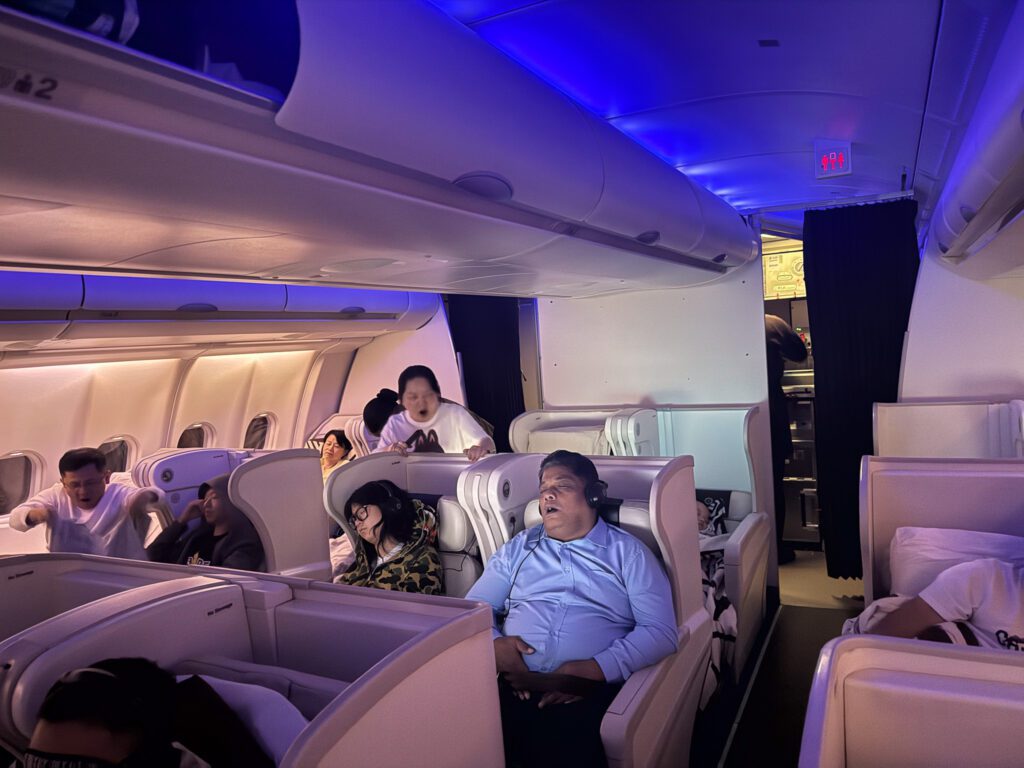
Walking into the Fiji Airways A330 business class cabin, the first impression is tidy and straightforward. The cabin is small, only 24 seats across four rows, in a 2-2-2 configuration. The upside of a smaller cabin is that it can feel quiet and personal. The downside is that this layout is a throwback, and you feel that immediately if you’re used to 1-2-1 seats with direct aisle access, or even just seats that make better use of the space — especially when it comes to storage.
For a couple, the layout can actually work in your favor. Sitting together by the window pair gives you easy conversation and a shared little “zone.” For solo travelers, it’s trickier. You’re either climbing over someone from the window, or you’re in an aisle seat with a neighbor close enough that you’ll coordinate armrests like strangers on a packed subway.
Seat selection comes down to what annoys you more: being disturbed, or disturbing someone else.
- If we’re flying as a couple, we prefer the window pair, because we can settle in and not feel like we’re in the aisle traffic. Check for bulkhead seats if you want extra legroom.
- If we’re flying solo, we’d pick an aisle seat, because aisle access is sanity on a long flight, even if it costs a bit of privacy.
The other surprise was storage. The seat area has pockets and compartments, plus cup and bottle holders, but the overall feeling is still “where does our stuff go?” There’s a lot of space in the cabin visually, yet it doesn’t always translate into the kind of practical storage that makes long-haul business class feel effortless. On a 10-hour flight, that matters, because you don’t want your headphones, water, and small bag playing musical chairs all night.
Seat comfort, sleep, and the angled-flat recline (who will be fine, who will not)
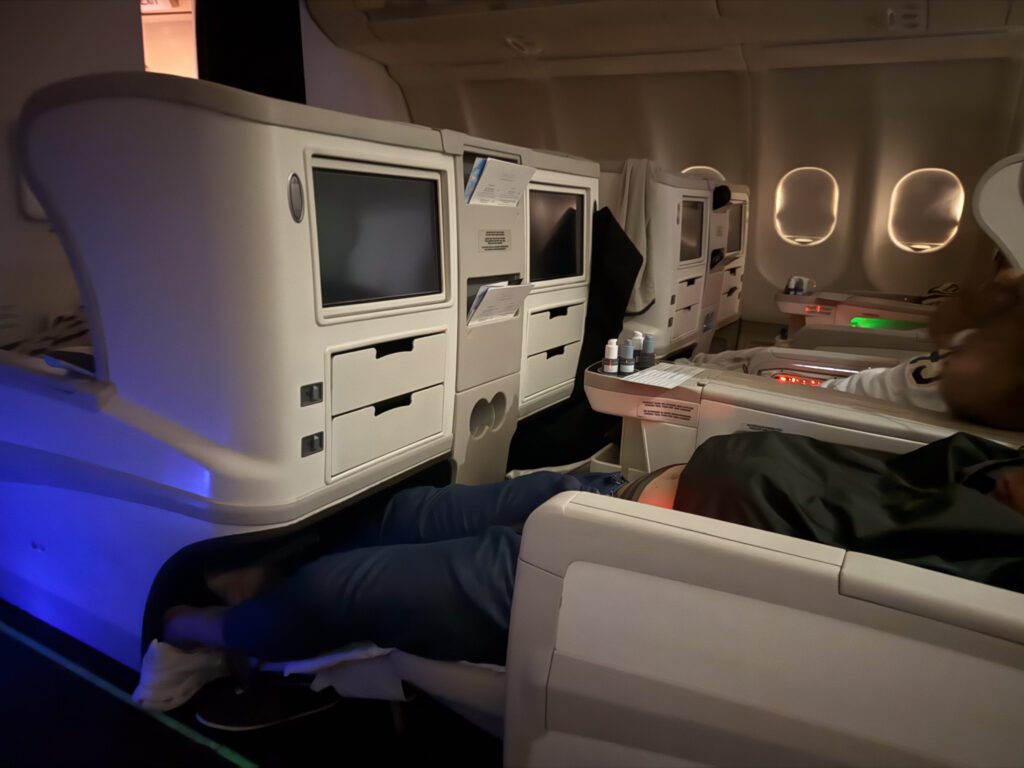
Let’s talk about the biggest make-or-break detail: these angled flat seats recline to an angled-flat position (roughly the 170 degree recline on this product), not fully flat like on the Airbus A350. That means you’re not sleeping on a “bed,” you’re sleeping on an angled bed.
How did it feel for us? We still slept (kind of), and we still arrived in better shape than we would’ve in economy. But it wasn’t the knock-out, eight-hour, fully horizontal sleep we’d normally aim for in business class on a 10-hour flight.
A few specifics from our experience:
The seat felt firm, which some people like, but it’s not plush. These leather seats have a solid tactile feel. The leg and footrest setup worked, but it could be fussy. If your shoes or a small item isn’t placed carefully, it can interfere with how the footrest moves and locks.
Height matters more than people expect. If you’re shorter, you might find the angled position totally workable. If you’re taller, the slope can turn into a slow slide, and the leg position can feel less natural over time.
Bedding was simple on our flight. We had a pillow and blanket. We did not receive a full amenity kit, however we did receive an eye mask and a few high quality skin care products.

One thing Fiji Airways absolutely got right was the bedding. The blanket felt high quality and substantial — not the thin, scratchy kind you sometimes see on older aircraft. The pillow was supportive enough that even with the angled-flat recline, we were able to get real rest. It didn’t turn the seat into a true bed, but it definitely made the experience more comfortable than the seat design alone would suggest.

One important warning: avoid the bulkhead (Row 1) if storage matters to you. Those seats lose the small storage cubbies that the other rows at least have. Instead of usable compartments, you’re facing a hard wall with shallow literature pockets — not actual storage. On a long flight, that makes an already tight setup feel even more cramped.
Power, storage, entertainment and WiFi

The practical basics were there. We had access to power (AC and USB on this seat type) but the storage was where this seat felt most dated. On paper, the cabin looks spacious — especially if you’re in a window seat, where there’s nearly a foot of unused space between the seat shell and the window. But none of that space is actually functional.
The small storage slots are tight and shallow. We struggled to fit even the basics — headphones, water bottle, phone, passport — without everything feeling stacked and awkward. There’s no good place to stash a laptop or iPad within reach, which becomes frustrating on a 10-hour flight when you’re constantly reorganizing your “flight essentials.”
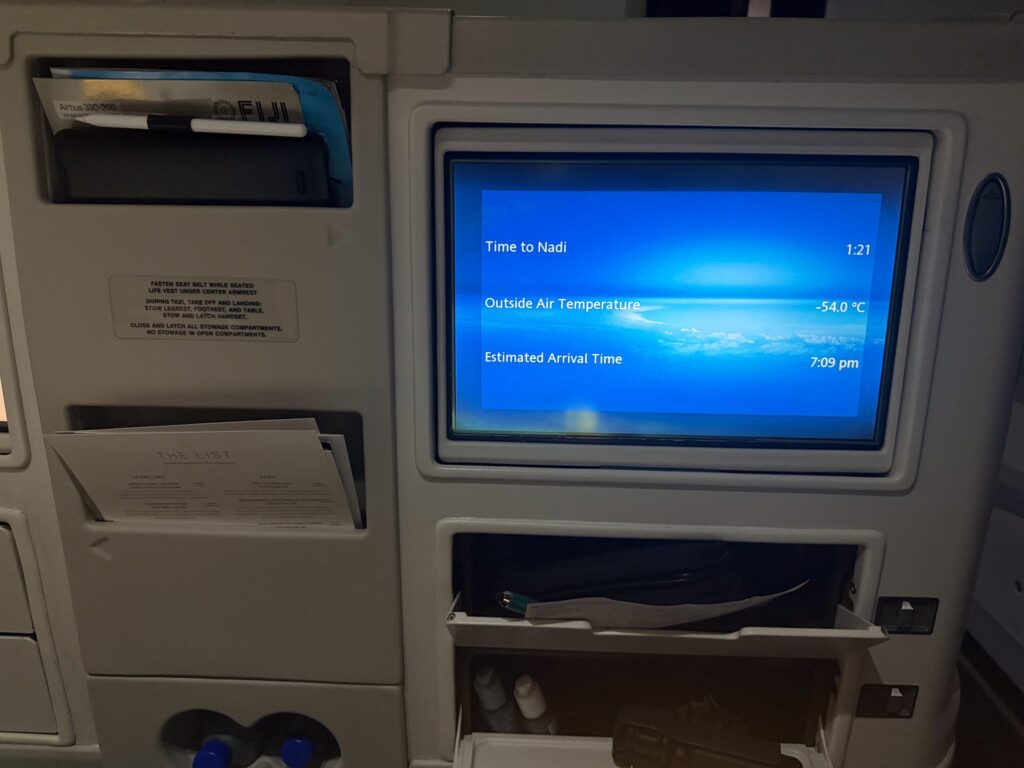
Inflight entertainment is where the dated aircraft age shows. The 15.4 inch monitor is decent-sized, but it’s not the modern, fast touchscreen experience you might be used to on newer cabins. Ours was controlled by a remote, and the interface felt older. Phitek headphones were provided, but we recommend bringing your own noise cancelling headphones if you prefer better gear. The movie and TV selection was fine for passing time, but it didn’t feel deep or current enough that we’d rely on it for the whole flight.
Our bigger callout is for anyone planning to work in the air. On our flight, Wi-Fi wasn’t usable for real work. We treated this as offline time. It’s unclear whether the aircraft simply doesn’t offer Wi-Fi or if it was inoperative that day, but either way, you should plan for zero connectivity. If you need to land with your inbox under control, download what you need, save documents locally, and plan your workflow like it’s 2009.
Food and service, where Fiji Airways really shines
If the seat is the “hard product” story, the service is the “why we’d still do it again” story.
From the start, Fiji Airways leaned into the Fijian hospitality Fiji is famous for. We were greeted warmly, and the cabin vibe was calm. Pre-departure, we were offered a welcome drink (typically champagne, juice, or water) and a hot towel. Fiji Water made an appearance too, which sounds like a small detail, but it fits the whole “you’re on your way to the islands” feeling.
We were also pleasantly surprised by the skincare touches. While there wasn’t a traditional amenity kit handed out, high-quality moisturizers and facial creams were available, and they felt thoughtfully chosen rather than generic. Combined with the Fiji Water and warm service, those small details added polish to an otherwise older hard product.


What stood out most was pacing and presence. The crew checked in often, but it didn’t feel like they were hovering. It felt like they were paying attention. That’s a hard thing for airlines to get right.
And then there’s the Fijian touch. Hearing “Bula” said with real energy doesn’t feel like a script. It feels like a mood. Even before we landed, we felt like we’d started the trip, which is exactly what we want from a long-haul premium cabin when the seat isn’t the newest on earth.
If you’re planning a full Fiji trip after landing, this flight pairs well with building excitement. We had that “we’re almost there” buzz long before the descent, and it made the older seat easier to forgive. If you’re still deciding whether Fiji belongs on your calendar this year, just go ahead and put Fiji on the bucket list, because the destination payoff is real.
Meal Service on Our HKG to NAN Flight – Surprisingly Strong Catering
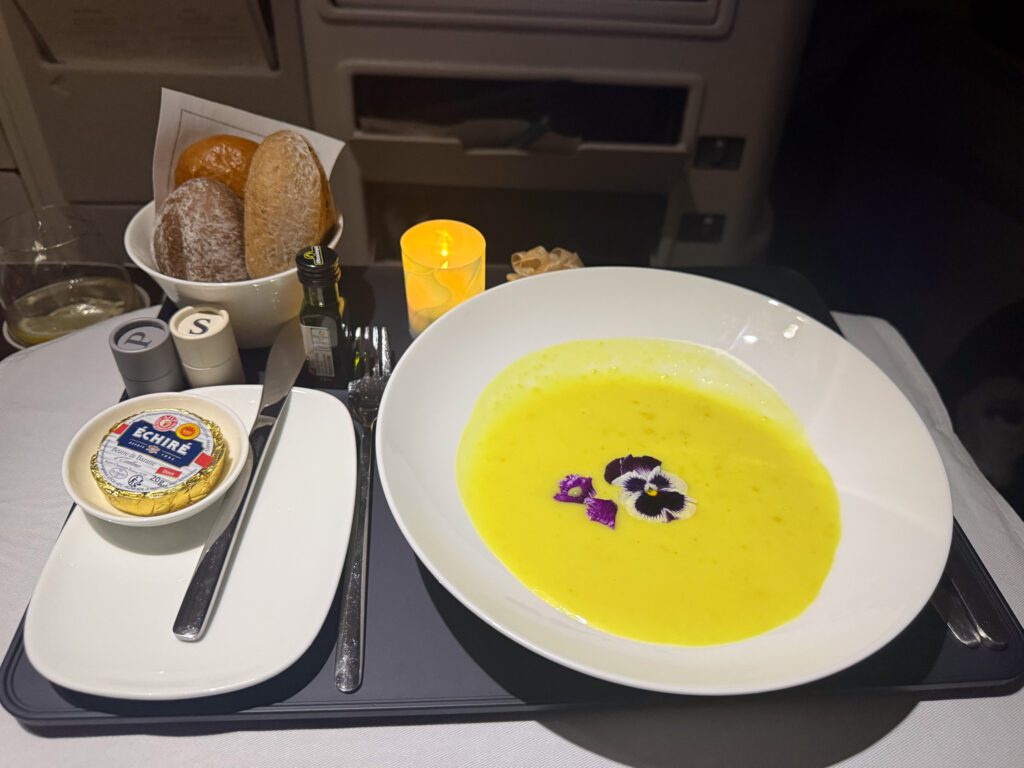

For a 10-hour Hong Kong to Nadi flight on an older A330, the meal service genuinely impressed us.
Dinner was structured as a full multi-course service, and it felt intentional rather than rushed.
We both started with the charred corn coconut soup, made with a coconut turmeric cream. It was bold, flavorful, and had real depth — not the watered-down “airline soup” experience you sometimes brace for. The coconut base gave it richness without feeling heavy, and it set the tone for a strong meal.

For my main, I chose the Kalua pork neck, served with sweet potato mash, asparagus, jalapeño salsa, and a mayo slaw. This was the standout of the flight. The pork was tender and well-seasoned, the sweet potato mash balanced the savory elements, and the jalapeño salsa added just enough brightness to keep it from feeling overly rich. It was one of those rare airline dishes where you pause and think, “Okay… this is legitimately good.”
Dessert was a banana macadamia cheesecake, and it absolutely delivered. The banana flavor was clear without being artificial, and the macadamia added texture. It didn’t taste like it had been sitting in a catering cart for hours — it tasted fresh.
Breakfast the next morning was equally solid.


I went with the yogurt and baked eggs, which came with chorizo, kale, sourdough, and a white bean ragu. It felt hearty and satisfying without being overly heavy before landing. The chorizo added spice, and the white bean ragu gave it a comforting, almost Mediterranean feel.
Taryn opted for the mango crepes, which came with sticky coconut rice and crispy mung beans, plus a fruit bowl. The combination of mango and coconut leaned into the tropical theme in a way that felt intentional — a subtle nod that you’re flying into the South Pacific.
Across both meals, the pacing was excellent. Trays were cleared promptly, drinks were refilled without needing to ask, and the service never felt chaotic. For an aircraft where the hard product shows its age, the catering and execution were genuinely strong.

Fijian hospitality in the sky, why the crew made the trip for us
We’ve flown plenty of premium cabins where the seat is amazing and the service is forgettable. This was the opposite. The crew created the experience with genuine Fijian hospitality.
They greeted us with “Bula,” they remembered requests, and they added small cultural touches that made the flight feel like an extension of Fiji, not just transportation to it. We also loved the moments where the airline gently introduced language and culture, because it set the tone for what we were about to experience on the ground.
Our one practical note is for remote workers and anyone with “I’ll just catch up on things in the air” plans: treat this flight like a break, download podcasts, save your reading, don’t count on strong connectivity, and bring your own amenity kit since none was provided.
Our final verdict, who should book this business class, and smart alternatives
We walked off this flight with a clear opinion: the Fiji Airways A330 business class seat is not the reason to book it. The people and the service are.
Here’s how we’d sum it up.
Pros
- Genuinely warm service that feels personal
- Solid meals with good pacing for a 10-hour flight
- Small cabin that can feel calmer than larger business class sections
- Priority services that remove stress at the airport
Cons
- Angled-flat seat, comfortable enough for a short-haul flight but not true lie-flat, sleep can be hit or miss
- 2-2-2 layout means many seats lack direct aisle access
- Dated entertainment and a more old-school cabin feel
- Wi-Fi may not be reliable, plan for offline time
If we’re advising different traveler types, this is how we’d call it:
Couples will usually like this product more than solo travelers. Taller sleepers should think hard before paying a premium just to sleep and consider looking for the Airbus A350 instead for a full lie-flat bed. Points-and-miles optimizers should compare the redemption or cash price against other routings that offer true lie-flat seats like the Airbus A350, even if it means adding a stop.
If we don’t love the options from our home airport, we’re also comfortable repositioning to a better gateway, as long as we build buffer time. We’ve laid out our full approach in our guide on positioning flights to unlock awards, because it’s one of the easiest ways to turn a “bad deal” into a smart one.
Quick decision guide, when we would book this again (and when we would not)
We’d book Fiji Airways business class on the A330 from Hong Kong to Nadi International Airport again if the price is fair, it’s a strong reward seat option, and our priorities are service, food, and arriving more relaxed than economy. We’d also book it again for a daytime flight, where sleep matters less and the seat becomes a comfortable lounge chair with great hospitality. While this was the original plan, the 12+ hour delay really changed things for us.
We’d skip it if we need a true bed, if we’re traveling solo and care a lot about privacy, or if the premium pricing is close to newer business class products with direct aisle access.
One final reminder: aircraft assignments and refurb cycles can change. We always verify the seat type and layout before we pay or transfer points. A “business class” label is not a guarantee, it’s a category.
Fiji Airways A330 Business Class Review: Final Thoughts

In our Fiji Airways A330 Business Class Review, we’d say yes to this flight again, with conditions. Fiji Airways business class on the A330 from HKG to NAN is an older seat paired with a strong soft product, and that soft product can carry the business class cabin in a way that surprised us.
If you’re booking with miles or considering an upgrade, plan around the angled-flat seat, pack a few comfort items, and treat the flight like the first chapter of your Fiji story, not just a commute.
Despite the cramped storage and angled-flat seat, the warmth of the crew, strong catering, and thoughtful touches (like quality bedding and skincare) carried the experience. The hard product feels dated. The soft product feels genuine. And on this flight, that mattered more than we expected.
If you’ve got questions about award searches, upgrade tactics, or the best seats to pick in the 2-2-2 cabin, drop them in the comments. We’ll help you sort out the details so your next points win actually feels like a win.